How intelligent document validation helps banks identify discrepancies early and strengthen trade finance risk management.
In trade finance, a small discrepancy can create significant operational challenges.
An inconsistent shipment date, conflicting quantity, incorrect product description or missing requirement can lead to clarification requests, processing delays, additional work and potential disputes.
For banks handling large volumes of international trade transactions, identifying these issues early is essential. Effective Risk & Compliance practices depend on accurate document examination, consistent procedures and timely identification of potential problems.
The challenge is ensuring that document checking remains reliable as transaction volumes and regulatory expectations grow.
Why Trade Document Checking Is Complex
A documentary trade transaction can involve several interconnected documents, each serving a different purpose.
A commercial invoice records product descriptions and values. A bill of lading provides shipment details, while an insurance certificate contains coverage information. A letter of credit sets out the documentary requirements against which a presentation must be examined.
Relevant details must be compared, and documents must be assessed against applicable transaction terms and rules.
This requires attention to detail, knowledge of trade finance standards and consistent application of checking procedures. Missing a discrepancy can create avoidable operational complications.
The Risks of Manual Document Verification
Manual examination relies heavily on employee experience, concentration and the time available for each transaction. Under high workloads, maintaining consistency can become challenging.
Common operational concerns include:
- Overlooked document discrepancies
- Inconsistent interpretation of documentary requirements
- Repeated verification and rework
- Delayed identification of exceptions
- Limited visibility into recurring errors
These challenges make Risk & Compliance an important consideration when banks review their trade finance processes. Strong controls require more than experienced employees; they also need reliable workflows and clear procedures for identifying and escalating exceptions.
How Intelligent Validation Strengthens Risk Controls
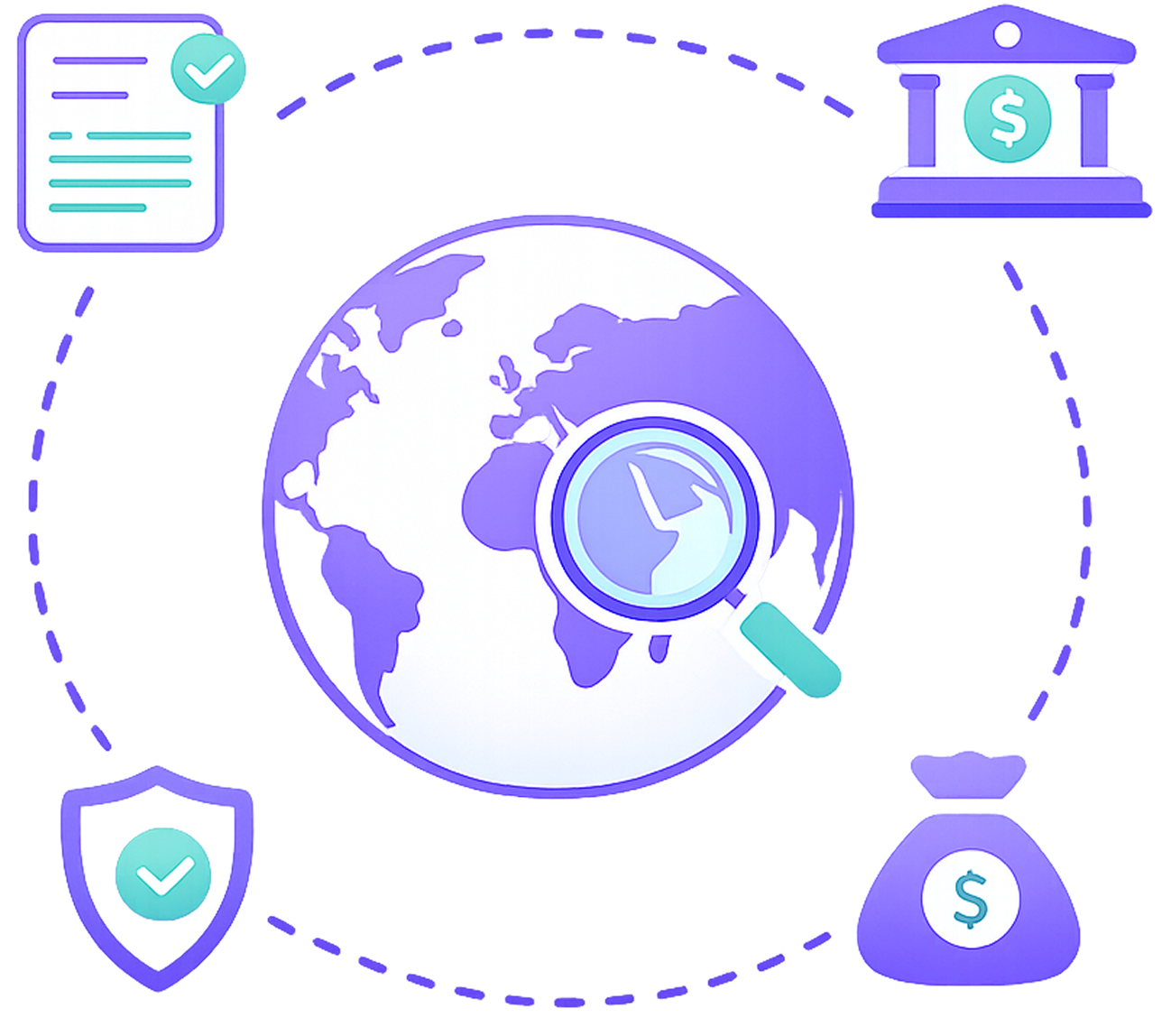
AI-powered document checking can support document data extraction, cross-document comparisons and the identification of potential discrepancies.
Instead of relying entirely on manual comparisons, operations teams can use automated checks to highlight inconsistencies that require further review.
For example, if a shipment date differs between two relevant documents, the system can flag the mismatch for investigation. This helps professionals focus on identified exceptions rather than checking every field manually.
However, automation does not eliminate the need for human judgement. Effective controls still require appropriate oversight, clear escalation procedures, system governance and accountability for decisions.
When implemented carefully, intelligent validation can support more consistent document examination and strengthen the operational framework surrounding trade finance transactions.
Applying International Trade Finance Standards
Documentary credit transactions frequently involve the International Chamber of Commerce's Uniform Customs and Practice for Documentary Credits, known as UCP 600.
When a documentary credit incorporates UCP 600, the rules establish a framework for examining documents and handling discrepant presentations.
Automated document checking can support aspects of this examination, provided the system is configured to reflect applicable rules and relevant bank procedures.
Technology should assist professionals in applying the correct requirements. Responsibility for compliant operations and final decisions remains with the relevant financial institution.
Measuring the Effectiveness of Document Controls
Banks need measurable indicators to understand whether intelligent validation is improving their processes.
Useful metrics include:
- Discrepancy detection performance: How effectively the system identifies relevant inconsistencies.
- False-positive rate: How often flagged issues are not actual discrepancies.
- Manual review requirements: The number of cases requiring specialist intervention.
- Consistency of rule application: Whether checking procedures are applied reliably.
- Exception resolution time: How long it takes to investigate and resolve identified issues.
- Audit trail completeness: Whether checking activities and decisions are appropriately documented.
Monitoring these measures helps banks assess control effectiveness without treating automation as a substitute for sound governance.
How Traydstream Supports Intelligent Document Scrutiny
Traydstream's TraydCheck solution supports AI-powered trade document verification, cross-document checking and discrepancy identification.
These capabilities can help banks improve visibility into document inconsistencies, streamline repetitive verification and direct specialist attention towards complex cases.
For trade finance risk leaders, the value lies in combining technology with established controls and professional expertise.
A well-designed approach to Risk & Compliance should support earlier identification of potential issues, consistent examination procedures and appropriate human oversight.
The outcome is a more structured approach to document checking, with clearer information available to support operational decisions.
Building Confidence in Trade Finance Decisions
Global trade finance requires banks to balance processing efficiency with accurate document examination and effective risk controls.
Intelligent validation can help identify potential discrepancies, reduce repetitive checking and support more consistent workflows. Its effectiveness depends on how well the technology aligns with applicable rules, internal procedures and governance requirements.
For banks looking to strengthen Risk & Compliance, the priority should be to combine intelligent technology with experienced professionals and clearly defined controls.
Because better trade finance operations are not defined only by how quickly transactions move. They are also defined by the confidence with which decisions are made.