Answer-first summary
Human error in trade finance can cause missed discrepancies, unnecessary referrals, delayed transactions, rework and increased compliance risk.
Automation reduces reliance on repetitive manual comparisons while allowing experienced specialists to retain responsibility for important decisions.
Human error by the numbers
- 94% of banks identify high manual AML and KYC workloads as a key operational challenge.
- 60% rely on manual intervention for more than half of their AML and KYC processes.
- Only 38% use some form of AI or machine learning within AML and KYC.
- The majority of global trade still relies on more than 40 official and commercial trade documents.
- Traydstream’s platform can apply more than 400,000 permutations of trade and compliance checks.
The AML and KYC figures cover wider financial-crime operations rather than trade finance alone, but they demonstrate the scale of manual work across regulated banking processes.
Where do manual errors occur?
Errors can be introduced when:
- Information is rekeyed from a document.
- Two documents are compared visually.
- Names are presented differently across languages.
- Units, currencies and date formats vary.
- A supporting document is overlooked.
- Guidance is interpreted inconsistently.
- A document image is unclear.
- Information is moved between separate systems.
- Employees work under sustained volume pressure.
The ICC Digital Standards Initiative describes the manual trade-data cycle as slow, labour-intensive, inefficient and vulnerable to errors, inconsistencies and fraud.
Why can a small error have a large impact?
A minor discrepancy can result in:
- An unnecessary referral.
- Additional communication with the customer.
- Delayed shipment or payment.
- Repeated document review.
- Missed service-level targets.
- Incorrect sanctions escalation.
- A genuine risk being overlooked.
- Customer dissatisfaction.
- Financial or reputational exposure.
The direct cost is employee time. The wider cost can be lost capacity, delayed revenue and a weaker customer experience.
Why more people do not always solve the problem
Increasing headcount may provide additional capacity, but it does not automatically improve consistency.
A manual process still depends on:
- Training every reviewer to the same standard.
- Keeping guidance current.
- Applying every rule consistently.
- Maintaining quality during volume spikes.
- Recording the reasoning behind decisions.
- Managing the effects of repetitive work.
Technology can standardise repeatable work while retaining human control over investigation and judgement.
How TraydGuard reduces avoidable manual risk
TraydGuard can perform defined compliance and risk checks automatically during document scrutiny.Potential issues are presented as exceptions instead of requiring the reviewer to search manually for every possible discrepancy.
This can help teams:
- Apply controls consistently.
- Compare fields across documents.
- Identify missing or conflicting data.
- Prioritise findings by severity.
- Record which checks were completed.
- Direct specialists towards higher-risk cases.
- Reduce duplicated effort.
- Build a stronger audit trail.
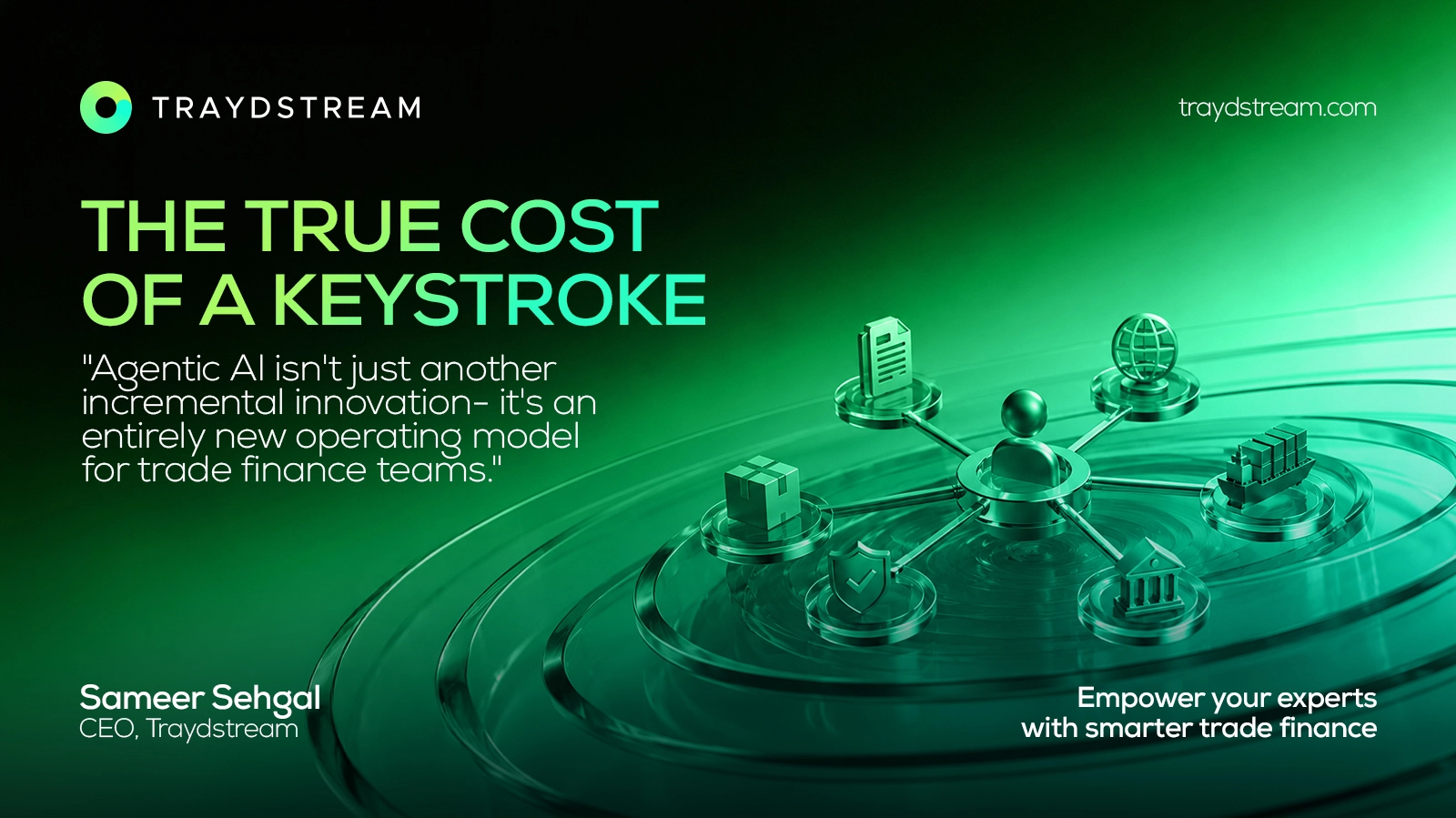
“Agentic AI is not just another incremental innovation—it’s an entirely new operating model for trade finance teams.”Sameer Sehgal, Chief Executive Officer, Traydstream
Human expertise becomes more important—not less
Automation changes how specialist time is used.
Instead of spending most of the day comparing routine information, employees can focus on:
- Investigating complex transaction structures.
- Analysing meaningful alerts.
- Communicating with customers.
- Applying risk-based judgement.
- Managing escalation.
- Improving internal controls.
- Understanding emerging financial-crime patterns.
The objective is not a human-free compliance process.It is an operating model in which technology performs repeatable checks and people remain accountable for the decisions that matter.
Reduce repetitive checking and direct specialist expertise towards the trade risks that require human judgement.